

Campus Control: Power, surveillance and disciplining of protest in Victoria’s universities
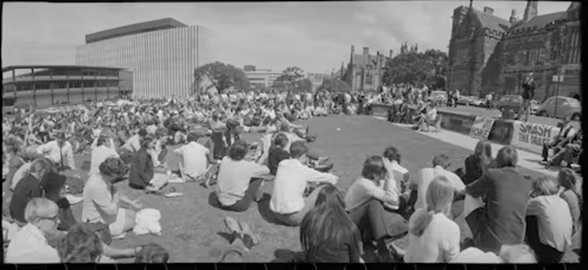
The right to protest is a fundamental human right, encompassing a number of recognised freedoms of assembly, expression, movement and association. While the right to protest is not absolute, limitations upon it must be necessary and proportionate to legitimate aims in a democratic society. Despite retrospective celebration of and admiration for protest movements that secured present-day freedoms, the current legal, political, and media landscape has become increasingly hostile to protest.
This report examines how university policies, surveillance practices and disciplinary processes are being used to restrict protest, expression, and privacy of both staff and students. It outlines the legal frameworks and obligations applying to Victorian universities and highlights ways these are potentially being contravened, putting public confidence in our universities at risk.
Universities serve as a place where critical thinking about an individual's place in the world, their rights and duties and those of our institutions can (and should) be openly debated. Principles of academic freedom and freedom of speech are contained in university policies, codes of conduct and the objects of the legislation empowering them. As public authorities with human rights obligations, recipients of significant taxpayer funding, and as institutions shaping the minds of future generations, it is crucial to assess and critique emerging practices of universities engaged in the repression of protest and freedom of expression.
Drawing on lived experience of staff and students who have experienced repression of campus protest and political speech, the report highlights the real impact of democratic backsliding in Victoria’s universities.
The report calls on Victorian universities to reverse disproportionate restrictions on campus protest, align policies and disciplinary processes with human rights and privacy obligations, prohibit the misuse of personal data for surveillance, improve review and reporting mechanisms, and reject approaches that punish or criminalise protest.
Instead, universities should embrace engagement, community-based care, collective responsibility and respect for human rights, and uphold their historic role as places of dissent, debate and free intellectual inquiry.